- Sep 16, 2025
AI Adoption Framework Pillar 2: Safeguards for AI-Driven Cyber Threats
- Business Navigator
- 0 comments
Artificial Intelligence (AI) is no longer just for big corporations. Today, businesses already use AI to automate tasks, improve customer service, make smarter decisions, and even deliver personalized marketing campaigns at a fraction of the traditional cost. In fact, surveys show that 82% of small businesses believe AI is essential for staying competitive.
But there’s another side to the story. The same AI tools that help you grow are also being weaponized by cybercriminals. They’re launching faster, smarter, and more convincing attacks—many designed specifically to exploit the limited resources of small businesses. The result: a single breach can cost $100,000 or more, plus lasting reputational damage.
If you’re a business owner, you can’t afford to ignore this.
The AI Threat Landscape: What You’re Up Against
Here’s a closer look at the biggest AI-powered threats targeting small businesses right now:
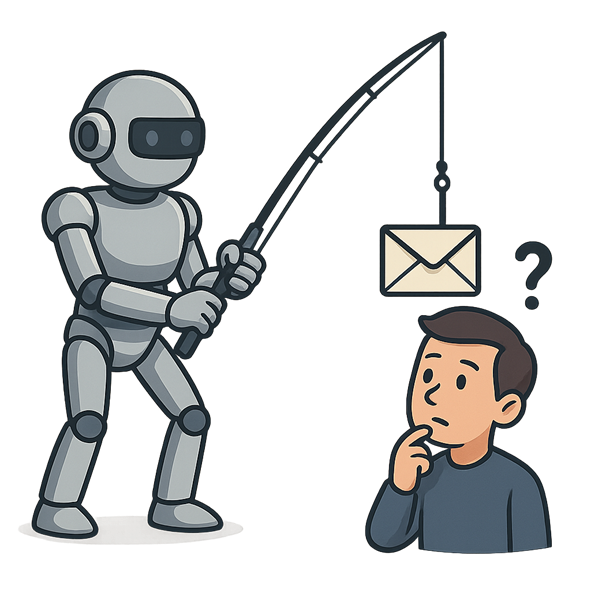
1. AI-Enhanced Phishing & Smishing
Hackers use AI to write highly personalized phishing emails or texts that mimic a trusted colleague, vendor, or even you. Unlike old copy-paste scams full of typos, these messages are polished, convincing, and much harder to spot. Some even deploy AI chatbots to answer in real time if an employee replies.
Defense: Strong passwords, MFA, AI-powered email filters, and regular anti-phishing training.
2. Deepfake Impersonation Scams
AI-generated audio and video can now clone voices and faces. Imagine receiving a video that looks and sounds exactly like your business partner authorizing a wire transfer—it may be fake. In 2019, a UK-based company lost $243,000 after criminals used deepfake voice technology to impersonate their CEO on a phone call (Forbes report).
Defense: Verify unusual requests manually, enforce strict approval processes, and use deepfake detection tools like Norton Genie or McAfee Deepfake Detector.
3. Adaptive Malware & Automated Vulnerability Discovery
AI lets hackers write malware that constantly rewrites itself—changing its “look” so traditional antivirus software can’t recognize it. AI can also scan your systems for vulnerabilities in minutes, exploiting weaknesses before you have a chance to patch them.
Defense: Automated patch management, behavior-based detection, encryption, and continuous monitoring.
4. Cybersecurity Evasion
Traditional antivirus tools look for “signatures”—known pieces of malicious code. But AI-powered malware changes too fast. Attackers can camouflage malicious activity to look like normal traffic, time attacks for nights and weekends, or use “adversarial attacks” that trick detection systems by altering files just enough to appear safe.
Defense: Upgrade to Endpoint Detection & Response (EDR) or Managed Detection & Response (MDR) systems, adopt Zero-Trust security (verify every access request), and run regular security audits.
5. Data Poisoning & Fake Reviews
Hackers don’t just want your money—they want your reputation. AI can flood online platforms with fake negative reviews, hurting customer trust. More advanced attacks corrupt the training data of your AI tools, causing them to make bad decisions.
Defense: Monitor reviews for suspicious patterns, encourage verified feedback from real customers, and regularly audit your AI systems.
6. Password Cracking at Machine Speed
AI can test billions of password combinations in minutes, cracking weak or reused passwords almost instantly.
Defense: Enforce MFA, require long and unique passwords, use secure password vaults (e.g., 1Password, LastPass, Keeper), and monitor the dark web for compromised credentials.
7. Exploitation of AI Systems
As you start using AI-driven tools—whether for accounting, HR, or customer service—they themselves become targets. Hackers look for ways to manipulate these systems, forcing errors, exposing sensitive data, or even hijacking operations.
Defense: Limit AI’s access to sensitive systems, apply strict access controls, and run regular vulnerability audits.
Your Three-Part Defense Strategy
While the threat landscape sounds daunting, small business owners are not powerless. The key is to think of AI cyber defense as a three-part framework that you can start implementing today.
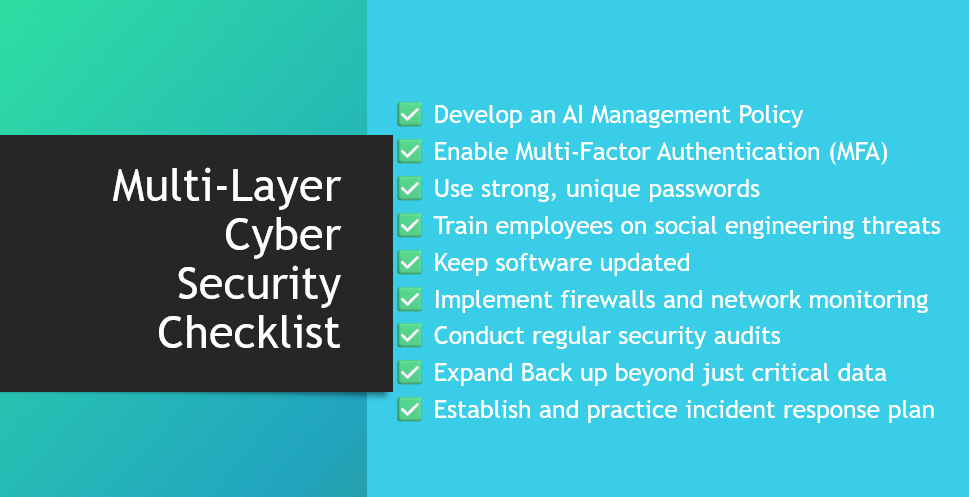
1. Start with the Basics
Think of this as locking your doors before worrying about security cameras.
Use strong, unique passwords for all accounts.
Enable Multi-Factor Authentication (MFA) on everything.
Keep all software updated (automate patching where possible).
Use firewalls and secure file-sharing platforms.
2. Strengthen Your Weakest Link—Your People
Employees are often the entry point for attacks. One click on a phishing email can undo every other security measure.
Train employees regularly on phishing, smishing, and deepfake threats.
Run phishing simulations to build awareness.
Establish clear guidelines with a Cybersecurity & Acceptable Use Policy so staff know what’s expected.
👉 Download a Free Cybersecurity & Acceptable Use Policy Template
3. Fight Fire with Fire
AI is also your best defense. Small businesses can now access advanced tools once reserved for enterprise IT budgets.
Deploy AI-powered security tools that detect suspicious behavior, not just known threats.
Consider EDR/MDR systems for real-time monitoring and response.
Automate patching and backups.
-
Prepare an incident response plan so you’re ready if an attack gets through.
Additional Resources
For small business owners who want to dive deeper:
NIST Small Business Cybersecurity Corner – Free guides and checklists designed for small businesses.
Ready.gov – Cybersecurity – Federal resources for cyber risk management.
Forbes: The First Deepfake Scam – Case study of a real-world deepfake attack on a small company.
Stay Resilient, Stay Competitive
AI adoption is no longer optional—it’s the path to growth and survival for small businesses. But with new opportunities come new risks. By starting with the basics, strengthening your people, and fighting fire with fire, you can protect your business from today’s AI-driven cyber threats.
The future belongs to small businesses that innovate safely. Stay informed. Stay protected. Stay resilient.
Sign up to get more FREEBIES!
Sign up to be notified when we have promotions, new resources, webinar and training announcements and more!